
How a Leading Fintech Cuts Weekly Compliance Reporting from 2 Days to 2 Hours
Fintech compliance reporting automation cuts weekly reporting time from 2 days to 2 hours using agentic AI for multi-source data extraction and report synthesis.
Manual Compliance Reporting Still Drags Fintech Teams Down
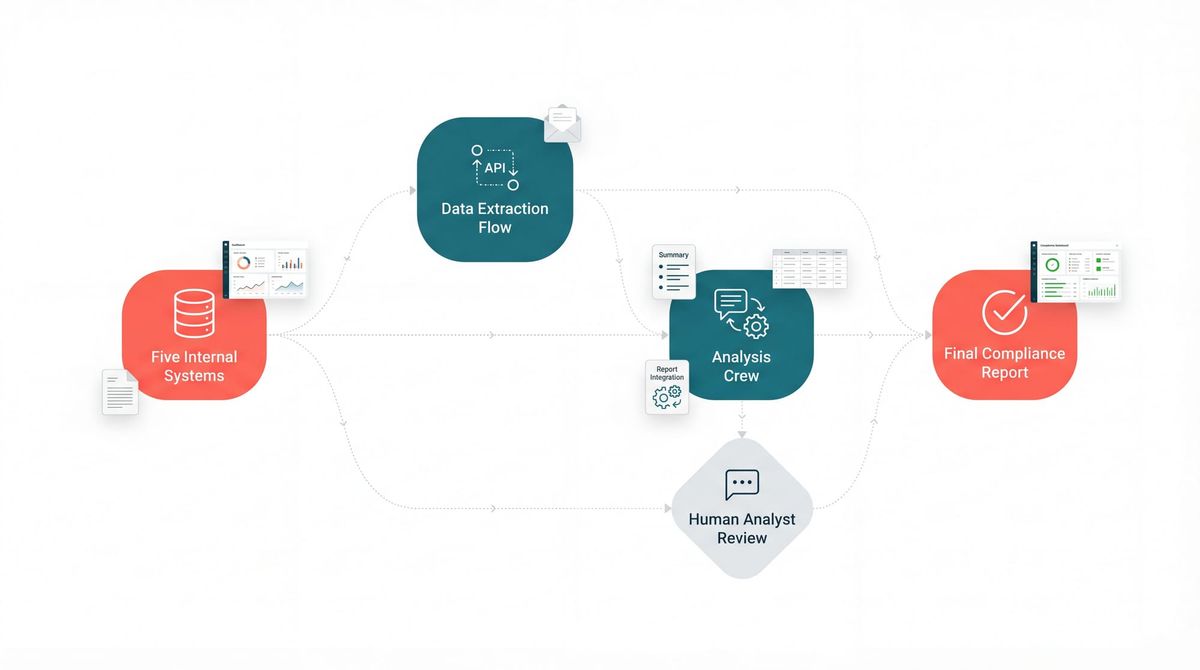
Despite fintech’s image as a high-tech, automated sector, 28% of financial institutions still struggle with errors from manual data reconciliation. A major fintech company spent two full days each week generating a critical compliance report. This was a drain on skilled analyst bandwidth and raised compliance risks.
Even small delays or mistakes in compliance can cause costly penalties and reputational damage. The firm had to aggregate data from five separate internal systems, spending about 16 hours weekly on one report.
Complexity Isn’t the Problem, Architecture Is
Many fintech firms try piecemeal automation like Robotic Process Automation (RPA) or rule engines. These handle repetitive tasks but fail with multi-source data integration and the dynamic narrative compliance demands. Outsourcing adds risk and delays. None solve the core issue: orchestrating diverse data and tasks with a flexible system that adapts to regulatory complexity.
Agentic AI Crews Shoulder the Work
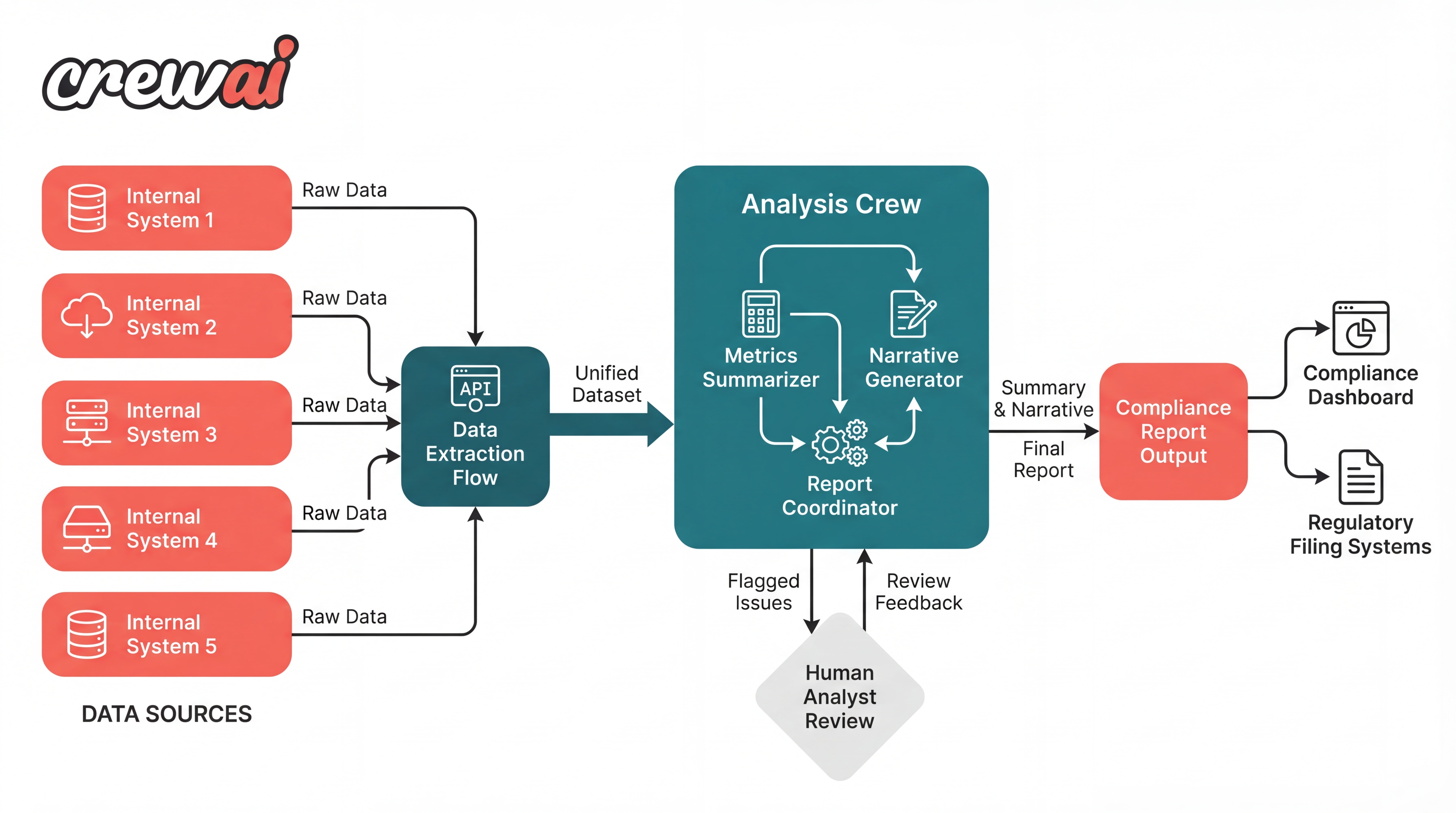
CrewAI’s solution isn’t a single bot or pipeline but a coordinated multi-agent system. It combines automated data extraction Flows and specialized Crews of agents, each with a clear role, collaborating to deliver the full compliance report in under two hours.
- Data Extraction Flow: Automates precise extraction of structured data from five disparate systems with repeatable API calls and transformations, producing a unified dataset.
- Analysis Crew: Receives the unified data. One agent summarizes key compliance metrics, another drafts narrative explaining compliance status, and a coordinator integrates outputs into a coherent report.
- Memory and Guardrails: The Crew maintains memory of past reports to ensure consistency and enforces guardrails to meet strict internal and external regulatory standards.
The Flow passes data smoothly to the Crew, enabling parallel workflows and iterative refinements monitored for errors. Analysts review flagged issues, but manual effort drops sharply.
From Two Days to Two Hours: What Changed
What took 16 hours over two days now finishes in less than two hours. That’s an 87% cut in turnaround time per report. This frees analyst capacity, cuts costs, and reduces human error.
The fintech team agreed to a six-figure contract after seeing these results. Automated extraction and AI synthesis boost consistency and traceability, key for audits.
Why This Holds for the Whole Industry
Fintech’s regulatory demands tighten yearly. Analysts spend over 60% of their time on manual data collection and reporting,a sector-wide bottleneck. Agentic AI architectures like CrewAI’s offer a scalable path. Unlike rigid RPA or slow outsourcing, this system adapts to changing rules and data, handling extraction and AI-driven synthesis within governed workflows.
Market data supports this: AI-powered RegTech is projected to grow from $15.4 billion in 2025 to $93.7 billion by 2030. Firms that automate complex reporting while ensuring compliance will win on cost, speed, and risk.
Compliance Automation Is About Workflow, Not Bots
The real gap is architecture, not automation tools. CrewAI's agentic AI replaces slow, error-prone manual work with intelligent crews that orchestrate data extraction, narrative synthesis, and compliance guardrails end-to-end. That’s how you go from two days to two hours.
Explore the CrewAI docs to see how your compliance workflows can leap forward.
Comments ()